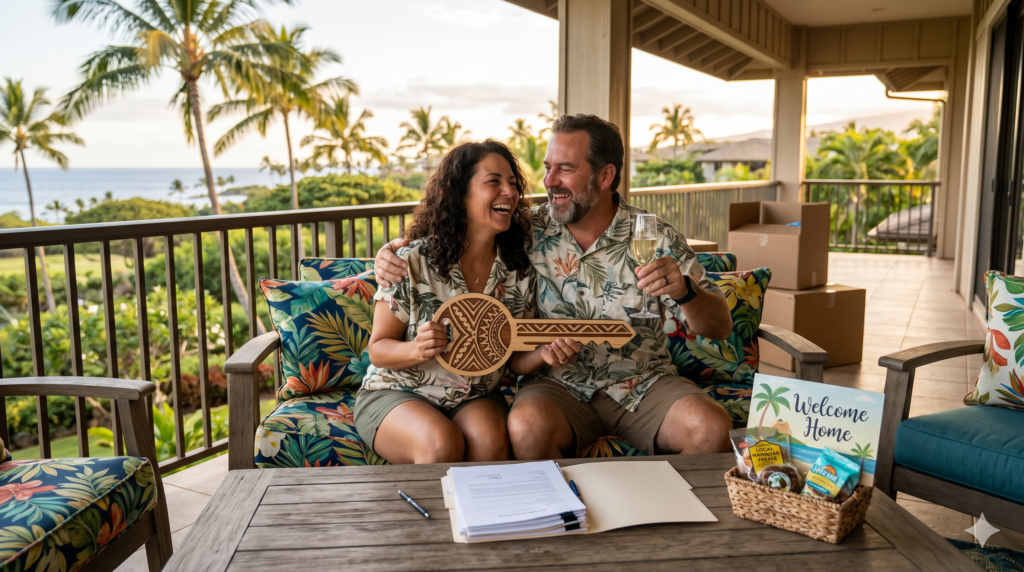
If you’ve been turned down by a conventional lender or credit union for a jumbo loan in Hawaii, you’re not alone — and you’re not out of options. Hawaii’s real estate market is one of the most unique in the country, with condotels in Waikiki, agriculture-zoned land on Maui, unpermitted additions across Oahu, and foreign national buyers who can’t qualify through traditional channels. Standard loan programs simply weren’t designed for this market.
That’s why C2 Hawaii works with specialized wholesale lenders that offer Non-QM Jumbo programs built specifically for complex, high-value scenarios.
Here’s everything you need to know.
What Is a Non-QM Jumbo Loan?
A Non-QM loan (Non-Qualified Mortgage) is any mortgage that falls outside the standard Fannie Mae and Freddie Mac underwriting guidelines. “Jumbo” means the loan amount exceeds the conforming loan limit — in most Hawaii counties, that’s above $1,249,125 for a single-family home in 2026.
Combine the two, and you get a Non-QM Jumbo loan: a large loan for a borrower or property that doesn’t fit the standard mold.
Non-QM Jumbo loans are commonly used for:
- Self-employed borrowers who can’t show traditional W-2 income
- Foreign nationals or visa holders without U.S. credit history
- Properties with unique characteristics (condotels, mixed-use, ag zoning, unpermitted ADUs)
- Investors using rental income or asset depletion instead of W-2 wages
- Borrowers with recent credit events or limited credit history
- High-net-worth borrowers who prefer not to liquidate assets for a down payment
Hawaii-Specific Scenarios Where Non-QM Jumbo Is the Answer
1. Condotel and Non-Warrantable Condo Purchases in Hawaii
Many of Waikiki’s most sought-after properties — including units in hotel-managed condo buildings — are classified as condotels or non-warrantable condominiums. Fannie Mae and Freddie Mac won’t touch these. Most banks won’t either.
We have Non-QM Jumbo programs that approve non-warrantable condos, condotels, and co-ops up to $5 million. If you’ve been told your dream Waikiki unit doesn’t qualify, call us before you give up.
2. Properties with Unpermitted Additions or ADUs in Hawaii
Hawaii has one of the highest concentrations of unpermitted additions and accessory dwelling units (ADUs) in the country. It’s a product of our building permit backlog, multi-generational living, and the island’s housing shortage. Conventional lenders reject these files immediately.
Wee have lenders that considers:
- Unpermitted additions
- Multiple or unpermitted ADUs
- Manufactured outbuildings
- Mixed-use properties
- Deed restrictions
If the appraiser can value it, there’s likely a path to approval.
3. Agriculture-Zoned Land and Hobby Farms
Hawaii has significant ag-zoned residential land, particularly on Oahu’s North Shore, Kauai, Maui, and the Big Island. Standard lenders avoid acreage and ag zoning entirely. We have lenders with no acreage limit and allows AG zoning — and they’ve recently funded a 46-acre hobby farm with a manufactured ADU.
4. Foreign National Buyers in Hawaii
Hawaii is one of the most popular destinations globally for foreign property investment — Japanese, Korean, Chinese, Australian, and European buyers all target our market. But most lenders require U.S. credit history and traditional income documentation.
Our Non-QM Jumbo program accepts:
- Foreign National buyers
- Work Visas (H-1B and others)
- Treaty Visas
- Student Visas
- Diplomatic Visas
- DACA recipients
- EAD, OPT, and CPT permit holders
No U.S. credit history required. These borrowers represent a major underserved segment in the Hawaii luxury market, and C2 Hawaii is equipped to help them close.
5. Self-Employed Borrowers in Hawaii
Hawaii’s economy is heavily entrepreneurial — restaurants, tour companies, charter boats, vacation rentals, real estate investors. Many of Hawaii’s most successful people show modest taxable income because they run it back through their businesses.
This loan program includes:
- 1-year tax return program (at lower LTVs, priced as Full Doc)
- Short-time self-employed borrowers
- RSU, stock awards, grants, and options counted as income
- Asset depletion programs that convert liquid assets into qualifying income
- Cash out can be used as reserves — powerful for investors who want to keep cash in the deal
Key Program Highlights: What Makes Non-QM Jumbo Stand Out
| Feature | Details |
|---|---|
| Max Loan Amount | Up to $5,000,000 including cash-out |
| Appraisals Required | Only one |
| Property Types | Non-warrantable condos, condotels, co-ops, mixed-use, ag-zoned, manufactured |
| Foreign Nationals | Yes — no U.S. credit required |
| ADUs | Multiple and unpermitted considered |
| Self-Employed | 1-year return program available |
| Cash-Out Flexibility | No seasoning required; listed properties eligible; cash out usable as reserves |
| Income Sources | RSU, stock awards, grants, options, asset depletion, rental income |
| LLC Titling | Allowed for investment properties |
| Co-Borrowers | Non-occupant co-borrowers allowed on rate/term refi, cash-out refi, second homes, and purchases with blended DTI ratios |
| Gift Funds | Gift of equity, gifted reserves, and gifted down payment — including on investment properties |
| Departing Residence | DTI and reserves from departing residence removed if 30%+ equity; must be listed by new home’s closing |
The Cash-Out Flexibility Is Genuinely Impressive
One of the most powerful features of this program is how it handles cash-out refinances:
- No seasoning required — you don’t need to have owned the property for 12 months before pulling cash out
- Properties listed for sale are eligible — you can do a cash-out on a home you have listed
- Cash out in hand counts as reserves — lenders normally exclude this; our lenders allows it
For real estate investors managing multiple properties in Hawaii, this opens significant liquidity options that conventional programs block entirely.
Asset Depletion: The Reverse Mortgage Alternative
Hawaii has a large retiree and semi-retired population — people who are asset-rich but show limited income. Our asset depletion program is a compelling alternative to reverse mortgages:
- Liquid assets are divided over a set period to create qualifying monthly income
- Can be combined with other income sources for stronger qualification
- Cash-out proceeds can be factored in as additional assets
If you or a family member is trying to purchase or refinance in retirement without touching Social Security or pension income to qualify, asset depletion may be the cleanest path.
Why work With C2 Hawaii for Your Non-QM Jumbo Loan?
C2 Hawaii is a mortgage broker, not a bank. That distinction matters enormously on complex loans.
As a broker, we:
- Shop your scenario across dozens of wholesale lenders — not just one product shelf
- Have access to programs like our Non-QM Jumbo that retail banks don’t offer
- Move faster with less bureaucracy than bank loan departments
- Give you honest advice about which program actually fits your situation
- Work with Hawaii-specific scenarios every day — condotels, ag land, foreign nationals, unpermitted ADUs
We’ve helped borrowers close deals that their bank told them were impossible. If you’ve been turned down or told your scenario doesn’t qualify, that’s usually the beginning of a conversation with us, not the end.
Common Questions About Non-QM Jumbo Loans in Hawaii
What credit score do I need for a Non-QM Jumbo loan? It varies by program and scenario. Some Non-QM programs work with limited or no U.S. credit history (especially for foreign nationals). For borrowers with U.S. credit, scores in the 660–700+ range are typically where these programs start.
Are Non-QM Jumbo rates higher than conventional rates? Yes, generally. Non-QM loans carry a rate premium over conventional conforming loans because they represent more complexity and often more risk. However, for borrowers who can’t qualify conventionally, it’s a comparison between a Non-QM rate and no loan — not between Non-QM and conventional.
How long does a Non-QM Jumbo loan take to close? 30–45 days is typical for a well-documented file. More complex scenarios may take longer. Starting with a full pre-approval conversation — not just a pre-qual — is critical on these loans.
Can I use a Non-QM Jumbo loan for an investment property in Hawaii? Yes. Many of the features above — LLC titling, gift of equity on investment properties, non-occupant co-borrowers, rental income without lease history — are specifically designed for investors.
What’s the difference between Non-QM and Hard Money? Hard money loans are short-term, asset-based bridge financing — typically 12–24 months — with very high rates and origination fees. Non-QM Jumbo is a permanent 30-year mortgage (or 15-year, ARM, etc.) at much lower rates. They solve different problems. If you need to close fast on a distressed deal, hard money. If you need a permanent loan on a complex property or borrower scenario, Non-QM Jumbo.
Do you work with foreign nationals buying in Hawaii who have no U.S. credit? Yes, and this is one of the strongest use cases for our program. No U.S. credit required. Work visas, treaty visas, diplomatic visas, DACA, EAD/OPT/CPT permits all considered.
Ready to Talk?
If you have a scenario that a bank or credit union turned down — or if you just want to know whether your deal has a path to approval — talk to us first.
C2 Hawaii specializes in complex mortgage scenarios in the Hawaii real estate market. We’ll give you a straight answer on what you qualify for and what program makes the most sense.
📞 (808) 369-1700 🌐 Contact C2 Hawaii →